High Court Considers Scope of SRA’s Power to Obtain Privileged Material
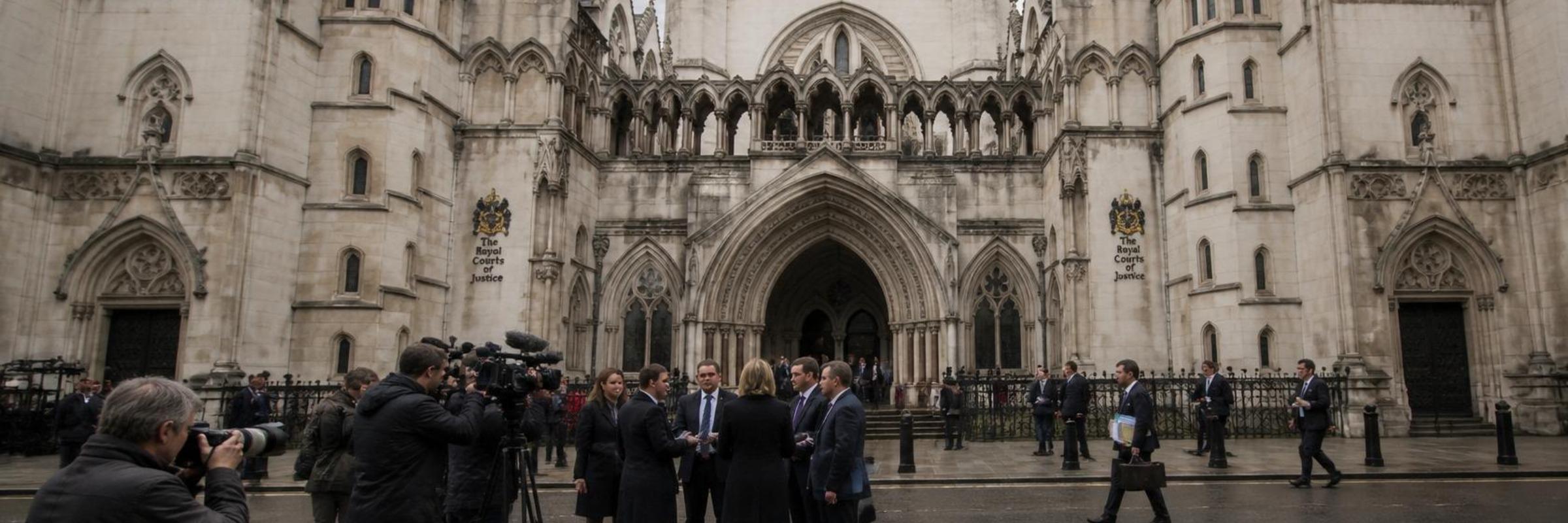
The High Court of England and Wales has heard submissions on whether the Solicitors Regulation Authority (SRA) may require the production of material protected by legal professional privilege under section 44B of the Solicitors Act 1974.
About the authors+

Reading context+
Jurisdictions
Topics
The High Court of England and Wales has heard submissions on whether the Solicitors Regulation Authority (SRA) may require the production of material protected by legal professional privilege under section 44B of the Solicitors Act 1974. The regulator argued that it cannot effectively regulate the solicitors’ profession without access to such material when investigating allegations of professional misconduct.
On the second day of the hearing, Tamara Oppenheimer KC, appearing for the SRA, submitted that the power conferred by section 44B is “confined” and serves the “limited purpose” of investigating a regulated person. She stated that the provision does not permit the SRA to invoke privilege against the client or to use privileged material for any collateral purpose..
Oppenheimer emphasised that the SRA accepts the absolute nature of legal professional privilege and takes its responsibility to protect client privilege during investigations and subsequent proceedings seriously. She argued that effective regulation forms part of the administration of justice and that the SRA would be “seriously limited” in its ability to investigate misconduct if it could not examine privileged documents.
She further submitted that it is incorrect to characterise the SRA’s case as one where a regulatory power somehow trumps legal professional privilege. According to her, it is not the case that the client’s privilege is overridden, destroyed or lost when the power is exercised. She added that a client’s ability to speak candidly to a solicitor would be of little value if the solicitor were not subject to effective regulation.
Oppenheimer acknowledged that it was common ground that the Solicitors Act 1974 contains no express power to compel the production of privileged communications, but argued that the provision should be understood as conferring such power by implication. In written submissions, she contended that Parliament did not intend to create a regulator that acts only in response to client complaints or solely with client consent. She also argued that the wording of section 44B mirrors that of the SRA’s limited intervention powers, indicating Parliament’s intention to extend such powers to the investigatory context.
In its written case, the SRA submitted that legal professional privilege and professional regulation are complementary aspects of the administration of justice. It argued that because much of a solicitor’s work is privileged, access to such material may be necessary to determine a solicitor’s knowledge or intention during misconduct investigations.
The court also heard that a person subject to a section 44B notice would have the opportunity to raise concerns regarding safeguarding issues. Oppenheimer acknowledged that conflicts with client interests may arise but maintained that such issues would need to be addressed in the course of exercising the power.
The hearing is ongoing.
Disclaimer: We strive to ensure the accuracy of our reporting. If you notice any factual inaccuracies or have updates, please write to us at [email protected]